
Carbon adsorption
A key differentiator is our Carbon Adsorption Technique, where odorous compounds—such as H2S, Mercaptans, and VOCs—are expertly adsorbed onto various carbon types. This selection, tailored to specific applications and client needs, underscores our commitment to optimizing performance. Critical design factors including gas retention time, carbon attributes, efficiency, and longevity further enhance our solutions.
Carbon Adsorption Technique
A key differentiator is our Carbon Adsorption Technique, where odorous compounds—such as H2S, Mercaptans, and VOCs—are expertly adsorbed onto various carbon types. This selection, tailored to specific applications and client needs, underscores our commitment to optimizing performance. Critical design factors including gas retention time, carbon attributes, efficiency, and longevity further enhance our solutions.

Concept and application of activated carbon adsorption
Activated carbon is a material used in more than 2,500 industrial and commercial products. Most wastewater treatment plants use this material to treat water and gases emitted from these facilities.
Activated carbon is a neutral solid absorbent material that is generally used to separate various pollutants from water as well as process gases. Activated carbon is produced from materials that have carbon in their structure, the most common of which are coconut shells, charcoal, wood and other similar materials.
Here it is necessary to point out the subtle difference between the two types of “absorption”. The absorption of substances by absorbent materials is carried out in two ways. One method is through the penetration of the substance into the absorbent material, which is called Absorption. In the other method, the adsorbed substance actually adheres to the surface of the absorbent material and “surface adsorption” occurs, which is called Adsorption. Since the English words for these two types of absorption methods are very similar, care must be taken to avoid using them incorrectly. The mechanism of adsorption in activated carbon is adsorption.
Activated carbon is a cheap and readily available porous material for absorbing substances. Its structure is such that it provides a very large surface area for adsorption per gram compared to other materials. To better understand this, it is interesting to know that a teaspoon of activated carbon provides a surface area greater than the area of a football field for adsorption!
It is because of this feature of activated carbon that this material is widely used to remove chlorine, taste, odor, color, and even some toxic substances from water. This adsorption occurs due to the interaction that occurs between these substances and the graphite surface of carbon. By charging the substances that adhere to it, activated carbon causes other substances to adhere to them and causes them to separate from the liquid and adhere to the carbon surface.
Activated carbon manufacturers use different raw materials and processes to manufacture this product. The figure below shows the general microscopic structure of the different types of activated carbon that are produced. This figure shows the molecular structure of three common types of materials used in the production of activated carbon: wood, charcoal, and coconut shell.

Types of activated carbon
Activated carbon is produced and marketed in various forms. The most common types include powder, granular, pellet, and block activated carbon.
Powdered activated carbon is micron-sized carbon obtained by grinding millimeter-sized granular carbon and has a higher absorption rate and capacity than carbon with larger dimensions.
- Powdered activated carbon
Powdered activated carbon is more useful for treating pollutants that occur suddenly in water sources. These include a sudden increase in algae (Algae Bloom) or the leakage of industrial materials from factories into the water. In the event of such incidents, powdered activated carbon can be added to water in treatment plants. In addition, powdered activated carbon is also used to protect filters containing granular activated carbon so that their efficiency is not reduced in the event of sudden pollution such as the one mentioned above.

- Granular activated carbon
Granular activated carbon has millimeter dimensions and is larger than powdered activated carbon. The use of granular activated carbon is common in refineries. However, the proper use of this type of activated carbon requires the necessary infrastructure for its activation and reuse. By transferring the used granular activated carbon to an activation furnace and regenerating and reusing it, considerable savings can be made. This will cost about half of the cost of using fresh granular activated carbon instead of used activated carbon. If there is no infrastructure for reactivating activated carbon, powdered activated carbon may be used instead of granular activated carbon.

- Tablet activated carbon
Tablet activated carbon is, in fact, a coarse-grained activated carbon that is commonly used to remove odor and hydrogen sulfide from vapors and gases in wastewater treatment. The coarseness of these grains, and consequently the relatively large size of the pores between them, allows the flow of vapor and gas to pass through it easily and without encountering resistance, reducing the energy required by the fan to pass the flow through the activated carbon layers.
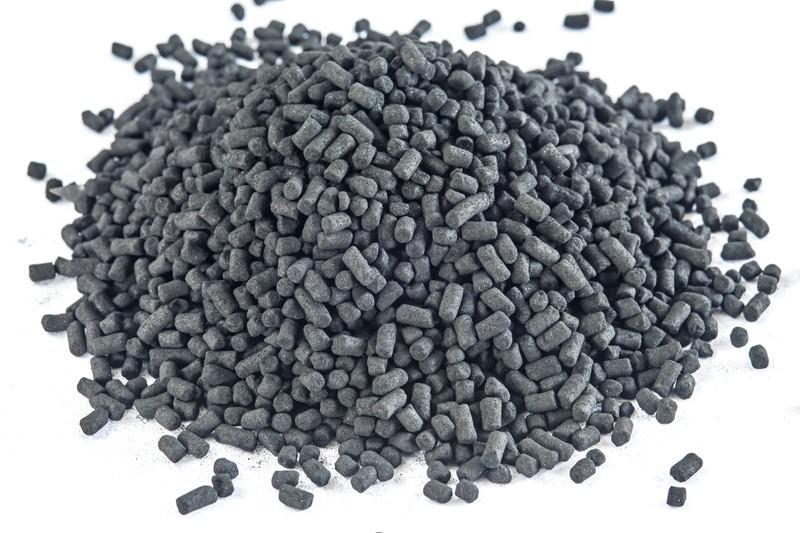
To absorb the smell of hydrogen sulfide, two types of carbon are used: normal carbon and catalytic carbon. Normal carbon oxidizes the mobile hydrogen sulfide and converts it into sulfur, which binds it to the surface of the carbon. After a period of use and by laboratory detection of the amount of sulfur accumulated on the carbon, the used carbon is replaced with new carbon. While catalytic carbon, by performing oxidation, converts hydrogen sulfide into sulfuric acid. The sulfuric acid formed in this way can be easily washed from the surface of the carbon and the carbon can be reused.
Activated carbon cannot be used for life. It is necessary to replace the activated carbon with new or regenerated activated carbon after a period of use. The reason for this is that, as mentioned, during the filtration time, pollutant particles accumulate in the pores in the activated carbon and gradually block them. Treatment plants that use activated carbon have two ways to replace used activated carbon. Either they must purchase new activated carbon or reactivate the used activated carbon. It should be noted that reactivated activated carbon loses its properties after being put through the reactivation cycle several times and must be replaced with new activated carbon.
Uses of activated carbon
Activated carbon is the best choice for purifying raw materials, intermediates and products in the oil and gas industry, as well as in hydrocarbon sweetening processes, catalytic decolorization or cleaning gas scrubber fluids to extend their life. Activated carbon is known as a widely used adsorbent due to its high specific surface area, porosity and ability to absorb gases and chemical liquids.
Using the adsorption method, it is possible to remove dyes, heavy metals, hydrocarbon compounds and other compounds from wastewater, thus increasing the system’s resistance to changes in organic load. Choosing the right type of activated carbon depends on the physical and chemical properties of the pollutant. Carbon is divided into different types based on surface properties, chemical and physical behavior and preparation method, which can be referred to as tablet, powder, granular and rod activated carbon.
Applications of the chemical substance Activated Carbon
- Use in gold mining
- Removing chlorine from water
- Catalyst manufacturing
- Purification of gases, water and wastewater
- Air filters
Packaging and transportation of activated carbon chemical
Activated carbon will have a long shelf life if protected from vapor and liquid contamination. Activated carbon is packaged in 500-1000 kg jumbo bags or 25-100 kg drums. It is non-toxic but flammable. There are no restrictions on the transportation of this material by land, sea or air.
Adsorption on activated carbon substrate (AC)
An activated carbon adsorption system typically consists of two or more activated carbon adsorption beds, where a gas stream containing solvent or SLA (Solvent Laden Air) is passed through one of the beds until the bed is saturated. After the first bed is saturated, the stream is directed to the second bed and the first bed undergoes a regeneration process. In this step, the absorbed solvent is separated using steam and the remaining steam in the bed is dried with hot air. At this time, the second bed is saturated, so the SLA stream returns to the first bed and the second bed is regenerated.

Jacobi Carbon

Jacobi Carbon, a distinguished collaborator, provides premium carbons like AddSorb® VA3 and AddSorb® Sulfox. These exemplify cutting-edge hydrogen sulfide and organic odor control, showcasing our dedication to excellence. Additionally, our utilization of water washable carbon allows in-situ regeneration up to 10 times, contributing to longevity and cost-effectiveness.
With a legacy of successful deployments, AmerAir International blends technical prowess with a strategic partnership approach, delivering innovative and efficient odor control solutions to meet the evolving demands of diverse industries.